
The road to Viksit Bharat 2047
India must lead in the values that make civilisations endure — the character dividend.
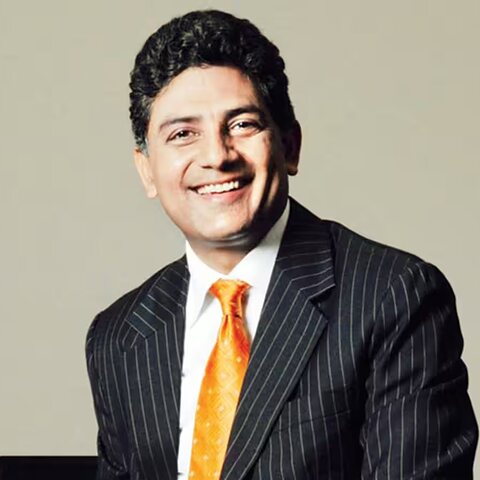 Ravi SharmaBusiness India · Column25 May 20267 min readNation
Key ideas
- Infrastructure is a nation's hardware; character is the software that decides whether prosperity lasts.
- The character dividend: integrity lowers friction, responsibility lowers supervision, trust lowers transaction costs.
- Enforcement matters, but fear cannot do the work of conscience — character has to be taught, from kindergarten to graduation.
Expressways, airports, Vande Bharat trains, a vendor in a remote village taking digital payments: the signs of a rising India are easy to see. This column begins by honouring them, and the ambition behind them — a developed India by 2047, the centenary of independence — and then asks the question that the visible signs cannot answer. Can a nation be called developed if its character has not kept pace with its infrastructure?
Hardware and software
The founder's image is an engineer's. Economic strength and technology are a country's hardware. Character is its software, invisible and decisive. When the software is compromised, the finest hardware eventually misbehaves. What really holds a developed nation up, he argues, is not steel, cement or silicon but trust, integrity and responsibility.
The character dividend
Economists speak of demographic and digital dividends. The column names a third that receives far less attention: the character dividend — the return a society earns when its people honour commitments, obey laws, refuse corruption, respect women, practise tolerance and take civic responsibility seriously. The mechanism is practical rather than sentimental. Each act of integrity removes a little friction; each act of responsibility removes a little supervision; each act of trust takes a little cost out of every transaction. Singapore and the Nordic countries are offered as evidence that trusted societies and prosperous societies tend to be the same societies.
Character is not merely a moral virtue. It is a national economic asset.
Moral capital
Alongside economic, financial, physical and human capital, the column sets a fifth stock, and calls it the most undervalued asset a nation holds: moral capital — the trust, integrity, responsibility, empathy and civic consciousness embedded in people and institutions. Where it is high, institutions are stronger, investment arrives more readily, and the state needs fewer controls and less policing.
What the deficit costs
India's difficulty, the founder writes, is not talent, ambition or opportunity. It is the widening gap between national aspiration and civic culture. Corruption steals more than money; it steals opportunity, safety and hope. Ignored traffic rules, damaged public property, routine littering and compliance treated as an obstacle are the everyday face of the same deficit. The sharpest example is the most uncomfortable one: bystanders at an accident who film instead of helping. These are described not as isolated lapses but as symptoms of conscience being neglected.
Why punishment is not enough
The instinctive answer is stricter law. The column grants that enforcement is essential, and then marks its limit in one sentence that has since travelled widely: a nation cannot police its way into integrity.
Building the foundations
If India wants to be developed by 2047, it has to invest in character with the seriousness it brings to roads and technology. This is where the Institute of Goodness places its Personal Social Responsibility learning frameworks, designed to run from kindergarten through graduation. The aim is stated plainly: not moral preaching but nation-building — a generation of doctors, administrators, teachers, judges and business leaders formed by empathy, civic duty and integrity as well as by competence.
The closing thought is the one the Institute returns to most often. History will not judge India in 2047 only by the size of its economy. GDP may settle how large a nation is; character settles what kind of nation it is. The real measure of Viksit Bharat will be what kind of Indians its citizens have become.
Ravi Sharma
Founder & Chairman, Institute of Goodness. Former Chairperson of the Boards of Governors of IIIT Una and IIIT Nagpur; Founder-President of the IIT Alumni Council; columnist for Business India; member of the World Economic Forum community.
Receive the latest news and analysis from the Institute of Goodness
Almost there — your email app opens with the message ready to send.