
Chief guest address: the character behind the credential
Notes from a convocation address on what a degree cannot certify.
 Ravi SharmaLinkedIn · Founder's post20244 min readSpeech
Key ideas
- A degree certifies knowledge; the world judges the graduate on character.
- Consistency between what you know, what you say and what you do when no one is watching.
- One question to carry out of the hall: in someone's moment of need, will you be the one they call?
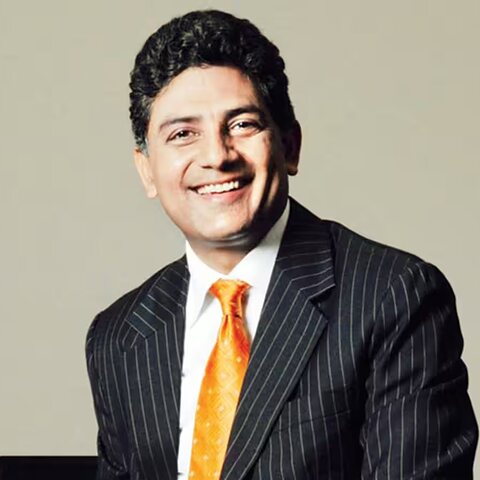
The post shares a short film of the founder delivering the chief guest's address at a graduation ceremony, together with the note he wrote for the graduates afterwards. Its argument is compact and has become one of the Institute's standard framings for young audiences.
What the certificate cannot say
A degree, he told the graduates, is a precise document. It certifies that a body of knowledge has been acquired and tested. What it cannot certify — what no institution can — is the quality on which every employer, colleague, partner and child will actually judge them: character. And character, in his definition, is simply consistency. The alignment between what a person knows, what they say and what they do, especially in the moments when nobody is watching and nothing would be found out.
Character is consistency: between what you know, what you say and what you do when no one is watching.
The question to keep
He asked the graduates to leave the hall with one question and to keep it alive for the rest of their lives: in someone's moment of need, will you be the person they call? It is the emergency-contact test from his Business India column, put to an audience at the exact age when the Circle of Care begins to narrow. The answer, he suggested, is not decided in a crisis. It is decided in ten thousand ordinary moments beforehand — the queue, the bill, the colleague, the returned phone — each of which either adds to a person's reliability or quietly withdraws from it.
Why the Institute measures this
The Goodness Score exists because of this argument. Its questions are precisely about those ordinary moments; its deterministic rubric rewards consistency across them rather than any single grand gesture. The score is a private mirror for the question the founder asked in the hall, and the graduates were, in effect, its first audience.
Watch and read
The film and the founder's note are on LinkedIn; the address belongs alongside the TISS convocation speech in our Watch & Listen section.
Ravi Sharma
Founder & Chairman, Institute of Goodness. Former Chairperson of the Boards of Governors of IIIT Una and IIIT Nagpur; Founder-President of the IIT Alumni Council; columnist for Business India; member of the World Economic Forum community.
Receive the latest news and analysis from the Institute of Goodness
Almost there — your email app opens with the message ready to send.