
Beyond examinations
Examination reforms should be only the beginning of educational transformation.
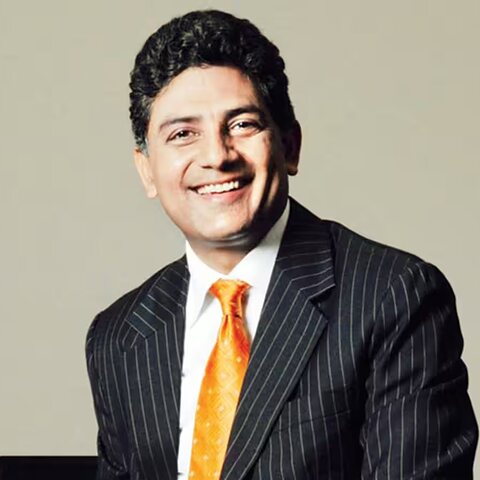 Ravi SharmaBusiness India · Column4 August 202611 min readEducation
Key ideas
- Every reform on the table answers how to test students; none answers what the test is for.
- Examinations are the final checkpoint of a long journey — redesigning the checkpoint alone produces a safer version of the same race.
- The purpose of education is not to enhance memory but to enhance the ability to learn.
The column is written in the shadow of a crisis. For five weeks, Jantar Mantar in Delhi had been the address of India's youth, gathered to protest an examination system that had betrayed them through paper leaks and administrative failure. The protest cost the education minister his job and produced the second high-powered committee in two years — this one under Nandan Nilekani — charged specifically with fixing how India examines its students.
The founder takes the response seriously and gives it credit. Shashi Tharoor's open letter to Nilekani, written in the aftermath, is one of the most substantive contributions the moment produced: computer-adaptive testing, cryptographically randomised question banks, a holistic admissions matrix, an ombudsman for educational examinations. Implement even half of it, he writes, and the system that millions of students depend on becomes materially more secure, transparent and fair. This is not a column against reform.
The prior question
It is a column about a question the reform cannot reach. Every recommendation on the table answers the same question — how should we test students? — and none of them answers the question that precedes it: what is the test for? This is not a criticism of Tharoor, whose focus was rightly the emergency at hand, nor of the Nilekani task force, which is explicitly a security-and-infrastructure body. It is a limitation of the moment itself. Crises produce checkpoints, not journeys.
An examination is the final gate of a very long educational road. Rebuild the gate to the highest standard and leave the road as it is, and the result is a safer, fairer, better-guarded version of exactly the same race — a race that still rewards the memorisation of answers to questions the world has already stopped asking.
The purpose of education is not to enhance the memory of students; it is to enhance their ability to learn.
What the journey should build
The column then does what the committees cannot, and describes the road. If the purpose of education is not to fill memory but to grow the capacity to learn, then a curriculum has to be organised around capacities rather than content. The founder sets out what the Institute now calls the Seven Pillars of Learning:
- Learn to learn — curiosity, method and the habit of asking better questions.
- Learn to think — reasoning from evidence, weighing arguments, forming independent judgement.
- Learn to adapt — resilience and agency in a world that will change its mind about what it wants from them several times in a career.
- Learn to collaborate — working across difference toward outcomes no individual could reach alone.
- Learn to flourish — the Pentad of Life: physical, emotional, mental, social and spiritual health as a taught competence.
- Learn goodness — the Five Foundations practised, reflected upon and, eventually, measured.
- Learn to relearn — unlearning as a discipline; the willingness to be a beginner again.
None of the seven is examinable by a three-hour paper, which is precisely the point. A system that can only measure recall will only teach recall, however secure its question bank.
India's next contribution
The essay closes on a larger canvas. Nations are remembered not for perfecting their examinations but for transforming how human beings learn. India has already given the world profound ideas — zero, yoga, democracy at continental scale. Its next contribution, the founder suggests, could be a philosophy of education built on one transformative principle: the purpose of education is not to enhance the memory of students; it is to enhance their ability to learn. Examination reform, in this reading, is the beginning of educational transformation — not its destination.
From column to curriculum
This is the essay behind the Personal Social Responsibility curriculum. PSR is co-designed with IIT and IIM faculty around the Seven Pillars, delivered as experience rather than lecture, and built to be measurable without being examinable in the old sense — through projects, reflection and, from age fourteen, a private Goodness Score. The Institute's goal of making PSR compulsory in every Indian school by 2030 is the road-building the column asks for, and the reason the Institute treats examination reform as an ally rather than an answer.
Ravi Sharma
Founder & Chairman, Institute of Goodness. Former Chairperson of the Boards of Governors of IIIT Una and IIIT Nagpur; Founder-President of the IIT Alumni Council; columnist for Business India; member of the World Economic Forum community.
Receive the latest news and analysis from the Institute of Goodness
Almost there — your email app opens with the message ready to send.