
Balance sheet's bankruptcy
Success without goodness is a net loss.
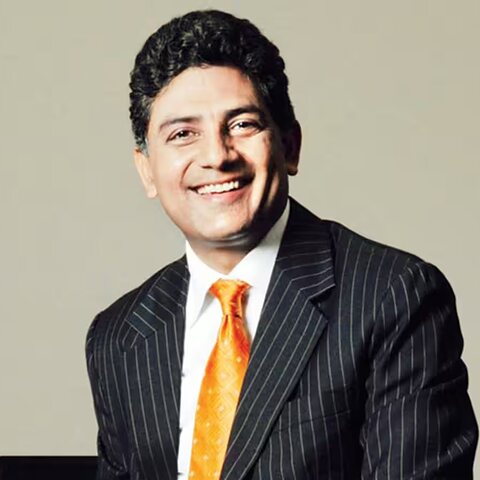 Ravi SharmaBusiness India · Guest column21 May 20268 min readEconomics
Key ideas
- A silent bankruptcy is unfolding that never appears on a ledger — in homes, relationships and inner lives.
- The race for success shrinks the Circle of Care until only the self is left inside it.
- The most honest indicator of a successful life: in a crisis, are you the person someone calls?
We have become a civilisation of ledgers. EBITDA, compound growth, productivity, shareholder value, national output — we track them with a devotion that earlier ages reserved for the divine, and we have never been better at it. The column opens by conceding the sophistication of all this and then asking what the ledgers have failed to notice: a slow bankruptcy that never appears in any set of accounts but is increasingly visible in our homes, our friendships and the private weather of our minds.
The diagnosis is structural. The model of success we run on is not wrong so much as incomplete by design. It measures the speed of the race and ignores the exhaustion of the runner and the erosion of the track. Systematically, and usually without anyone deciding it, the model trades mental health, social trust and human stability for gains that can be booked this quarter. A model that consumes its own foundations is, by definition, unsustainable — economically and existentially.
The atrophy of empathy
The modern race is individualistic in a way that earlier forms of ambition were not. As people move from villages to megacities and from junior roles to executive suites, competition intensifies and time becomes the scarcest currency they own. The column identifies the first casualty with precision: sensitivity. To succeed, people are told to stay focused. Focus, the founder observes, has become a polite corporate euphemism for emotional unavailability. The minutes it takes to notice another person's difficulty, to listen without waiting to speak, to attend a funeral or a school play, are reclassified as interruptions to ambition — and ambition always wins the scheduling conflict.
The shrinking Circle of Care
The cumulative effect has a name in the founder's vocabulary: the Circle of Care. Not long ago, for most Indians, that circle was wide — a dense ecosystem of extended family, neighbours, friends, colleagues and community, each with obligations running in both directions. The column describes how it has contracted, generation by generation, until for many people it holds only the self, or at most the immediate household. We have traded connection for convenience, obligation for optionality, and called the trade freedom.
In someone's moment of crisis, you are the person they call.
A narrow circle is efficient. It is also fragile. When the circle contains one person, every difficulty in that person's life has exactly one person to absorb it, and the arithmetic of resilience stops working.
Goodness as infrastructure
Against this, the column makes a claim that recurs throughout the founder's writing but is sharpest here. Goodness is not a sentimental idea reserved for spiritual retreats, nor a hobby to be taken up in retirement once the serious business of accumulation is complete. It is invisible infrastructure — the unseen system of trust, attention and mutual obligation that keeps individuals and societies emotionally solvent. Roads and power lines are maintained because everyone can see what happens when they fail. Goodness fails silently, and its failure is booked to other accounts: healthcare, policing, absenteeism, loneliness.
Until the yardsticks are corrected, the column argues, we will keep constructing lives that are materially opulent and emotionally hollow — and calling the construction a success. Success without goodness is, in the only accounting that finally matters, a net loss.
The emergency-contact test
The essay closes with a measure so simple that it has become the Institute's most-quoted idea. Forget net worth, title and follower count. The most meaningful indicator of a successful life is this: in someone's moment of crisis, you are the person they call. It is a test that cannot be gamed, purchased or delegated. It can only be earned, over years, by being reliably present in other people's lives — which is to say, by goodness.
How the Institute uses it
The emergency-contact test now opens PSR sessions for senior students, who are asked to list who would call them and whom they would call — and to notice the gap. The Circle of Care is a diagnostic in the Institute's institutional assessments. And the column's core distinction between visible ledgers and invisible infrastructure is the reason the Goodness Index measures consistency across home, work and public life rather than any single generous act.
Ravi Sharma
Founder & Chairman, Institute of Goodness. Former Chairperson of the Boards of Governors of IIIT Una and IIIT Nagpur; Founder-President of the IIT Alumni Council; columnist for Business India; member of the World Economic Forum community.
Receive the latest news and analysis from the Institute of Goodness
Almost there — your email app opens with the message ready to send.